
Choosing the right Wi-Fi hotspot management software in 2026 is a decision that affects your revenue model, your hardware costs, and your ability to serve customers across different markets and payment preferences. The landscape has matured: operators now expect cloud-native platforms, hardware independence, multi-site dashboards, and payment integrations that go far beyond a single card processor.
The captive portal market reached $1.52 billion in 2026 and is forecast to hit $3.38 billion by 2032, fuelled by ISPs, MSPs, hospitality groups, and venue operators who want to monetize connectivity. Five platforms stand out this year: Powerlynx, Antamedia, Spotipo, Purple, and SocialWiFi. Each takes a different approach and the right choice depends entirely on your scale, your market, and what you need to monetize.
Key Features to Look for in Wi-Fi Hotspot Software in 2026
Not all platforms are built for the same operator. Before comparing products, it helps to know which capabilities actually matter for your business model.
1. Payment gateway coverage
Monetization capability is the most important differentiator between platforms in 2026. The question is no longer just ‘does it accept cards?’. It’s whether the platform supports the payment methods your specific customers use. In North America and Europe that means Stripe, PayPal, and card processors. In Southeast Asia it means e-wallets like Xendit. In Africa and the Middle East it means mobile money – M-PESA, MTN MoMo, Paystack. In South Africa it means EFT and prepaid voucher networks.
Look for native integrations, automated session activation on payment confirmation, and the ability to run multiple gateways per account – configured per location. The platform should also be able to integrate new payment systems rapidly as needs evolve.
2. Hardware compatibility and cloud management
Multi-site operators need a cloud-native platform that works with hardware already in the field (MikroTik, Cambium, Ruckus, Ubiquiti, Teltonika, or others) without replacing equipment. Hardware-agnostic RADIUS + WireGuard/OpenVPN support, auto-generated setup scripts, and a unified multi-site dashboard are the baseline requirements in 2026.
3. Marketing and guest engagement tools
A captive portal is a data collection and marketing touchpoint, not just an access gate. Every login is a potential customer relationship. Look for: branded splash pages, guest data capture (email, phone number, demographics), segmentation tools, SMS and email campaign capability, and (for operators who want advertising revenue) a built-in ads module.
4. Multi-site management and white-label
ISPs and MSPs managing 10+ client locations need hierarchical access (operator sees everything, each client sees their own data), white-label splash pages and voucher PDFs, and clean revenue reporting per site. Platforms built for single venues break down quickly at scale.
The Best Wi-Fi Hotspot Software in 2026
Powerlynx – Best Overall for ISPs, MSPs, and Multi-Site Operators

Powerlynx is a cloud-native Wi-Fi hotspot management platform built by the Splynx team – the ISP billing company serving 1,000+ internet providers worldwide. It combines hotspot management, monetization, marketing, and multi-site operations in one platform, with 11 native payment integrations spanning North America, Europe, Southeast Asia, Africa, and the Middle East.
Pricing
$0.25 per concurrent online user per month. Base plan: $100/month covering up to 400 concurrent users. Unlimited access points, unlimited locations, and all features included — no per-AP charges, no per-location fees, no feature paywalls. Full details at powerlynx.app/pricing.
Payment gateways
Powerlynx ships 11 native payment gateways in a single account: Stripe (46+ countries), PayPal (200+ countries), Xendit (Southeast Asia — Indonesia, Philippines), Safaricom M-PESA, MTN MoMo (14 African countries), Paystack (Nigeria, Ghana, Kenya, South Africa, Côte d’Ivoire), DPO Pay (17 countries across Africa and the UAE), PayFast, Netcash, 1Voucher, and OTT Voucher. All gateways are available from day one, configurable per location, with no extra charge per gateway. Among the platforms reviewed here, Powerlynx offers the most modern, pre-integrated global gateway suite – ready to use without custom development or third-party setup.
Hardware support
Powerlynx natively supports MikroTik, Cambium, Ruckus, Teltonika, Cudy, and Nokia, plus any router supporting WireGuard, OpenVPN, or public-IP RADIUS. The MikroTik configuration guide includes an auto-generated terminal script – setup completes in under 5 minutes.
Marketing and guest engagement
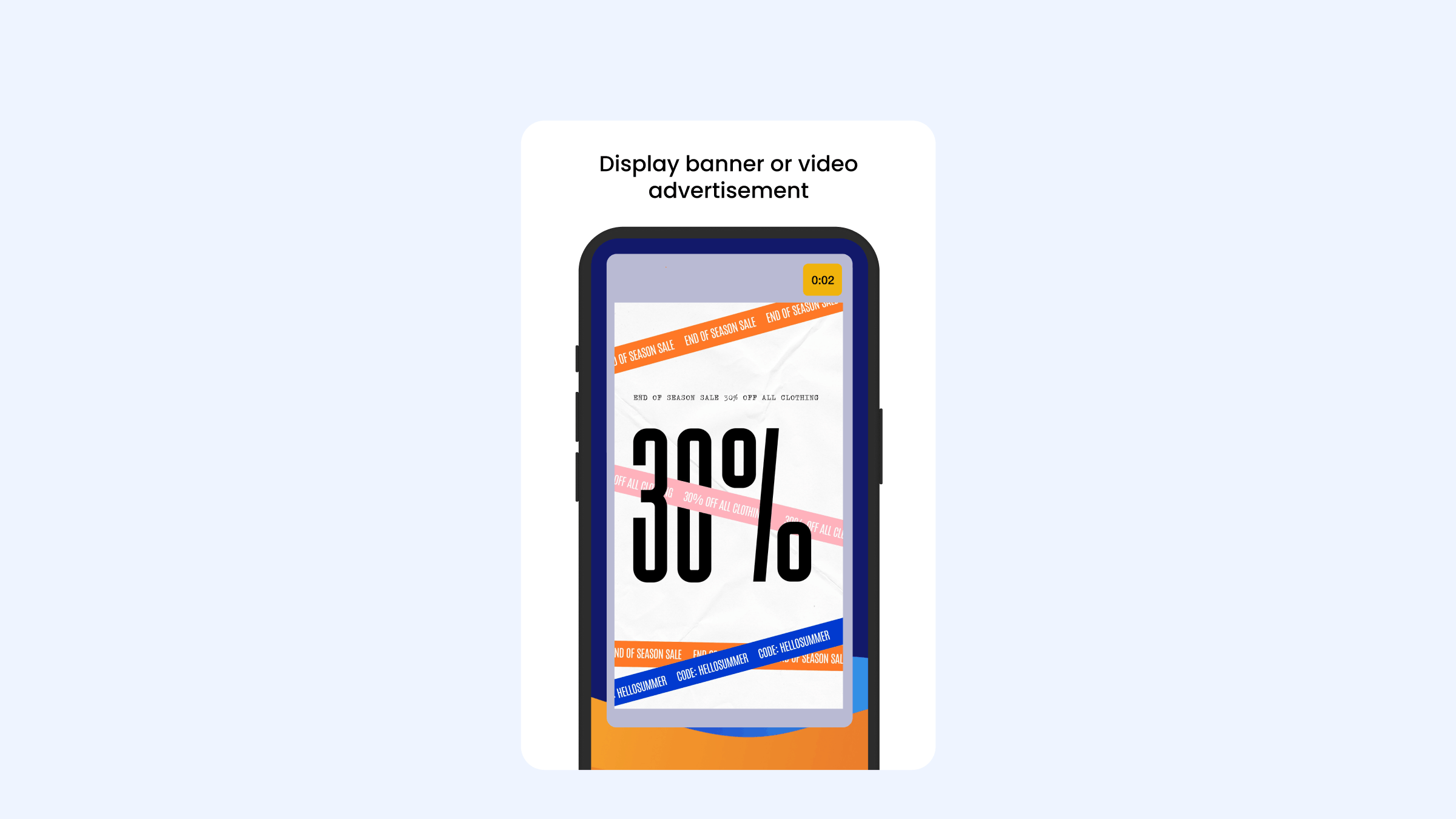
Powerlynx turns every captive portal login into a marketing touchpoint. The platform’s Wi-Fi advertising module lets operators display video and image ads on the splash page, earning advertising revenue from the same infrastructure used to deliver internet access. Ads can be served free-for-ad-view (guests get Wi-Fi in exchange for watching an ad) or combined with paid access.
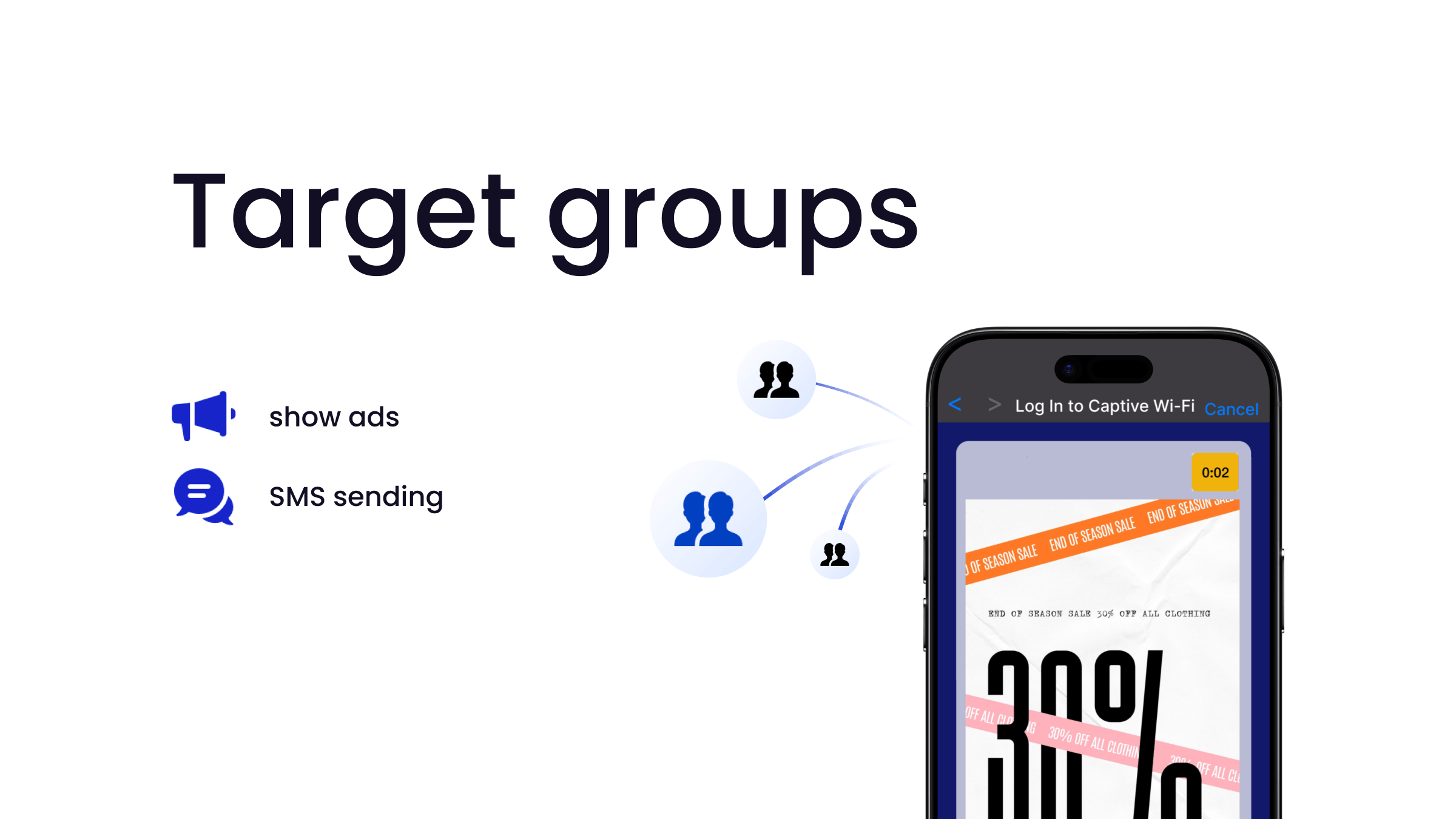
Beyond ads, every user login captures guest data – email, phone number, and any custom fields you define. Operators build Target Groups (segments based on login behaviour, specific info, or location) and run mass SMS campaigns directly from the dashboard.
The no-code splash page editor lets operators design fully branded login pages without writing code – logos, colours, fonts, layouts, and promotional banners. For MSPs, each client gets their own branded splash page and voucher PDFs without any additional setup cost.
White-label and MSP tools
Powerlynx supports full white-label deployment for MSPs and resellers. Splash pages, voucher PDFs, and client-facing reports all carry the MSP’s brand. The multi-site dashboard gives hierarchical access – the MSP sees all client locations, each client sees only their own data. A Reseller Portal enables MSPs to onboard, manage, and bill sub-accounts independently.
Free trial
21 days, all features enabled, no credit card required.
Real operators using Powerlynx
Powerlynx powers 400,000+ monthly Wi-Fi users for 200+ ISPs and operators across 25 countries. Published case studies include Inovi Tel (57 hotspots, South Africa – dual voucher and advertising revenue on the same infrastructure), Project Isizwe (1,002 hotspot sites, 8 provinces, 115 schools, 70,000+ learners), SpeedTouch (12 locations, Egypt, Damietta Entrepreneurs Award December 2024), CJIES (community Wi-Fi in South Sudan), and Urban Connect Networks (100+ hotspot points, Kenya, student market). All case studies at powerlynx.app/use-cases.
Pros
- Cloud-based – no server to maintain, automatic updates, accessible from anywhere
- 11 native payment gateways covering 50+ countries across all major regions
- Built-in marketing engine: video/image ads on splash page, Target Group segmentation, mass SMS
- No-code splash page editor – fully branded portals without writing code
- Unlimited APs and locations at every pricing tier – no per-site charges
- Per-concurrent-user pricing stays cost-efficient as location count grows
- MikroTik, Cambium, Ruckus, Teltonika, Cudy, Nokia natively supported
- Built by the Splynx team – 10+ years of ISP billing expertise
- White-label splash pages, voucher PDFs, and Reseller Portal for MSPs
- 21-day free trial, all features, no credit card
Cons
- Minimum $100/month — for very small single-site deployments under 50 concurrent users, entry-level competitors start cheaper
| ☆ Read also: How to Launch a Paid Wi-Fi Voucher Business
☆ Read also: All payment gateways on Powerlynx — setup guide ☆ Read also: How to boost Wi-Fi monetization with ads |
Antamedia – A Legacy Option for Single-Venue Operators

Antamedia has been building hotspot software since 2006. It covers the basics well for single-venue operators in the café, kiosk, or hospitality space – particularly those who need an on-premise option for data control. It was not designed for ISPs or MSPs managing multiple locations, and its per-AP pricing model becomes expensive at scale.
Pricing
Antamedia uses two pricing models. Full details at app.antamedia.com/pricing. The cloud tier charges per access point per year: Cloud Core €59/AP/year (bandwidth management, social login, splash pages, analytics); Cloud Premium €99/AP/year (adds card and mobile money billing, marketing campaigns, video ads); Cloud Ultimate €139/AP/year (full suite). The Business tier is per-property: Business Core €499/year (1 property, unlimited APs, 150 simultaneous users); Business Pro €999/year (300 users + PMS); Business Max €1,499/year (450 users). Multi-location Enterprise starts at €2,990/year.
Payment gateways
Antamedia has the largest payment gateway list in this comparison – 112+ integrations. Modern gateways include: Stripe, PayPal, Authorize.NET, Adyen, BrainTree, WorldPay, Razorpay (India), Xendit eWallet (Philippines), MercadoPago (South America), M-PESA (via iPay/Flutterwave), MTN MoMo, Paystack, Netcash (South Africa), Pesapal (multiple countries), AzamPay (Tanzania), Wave Mobile Money, Halyk Bank ePay (Kazakhstan), and many more regional processors. Full gateway list at antamedia.com.
Marketing
Video and image ads on splash pages are available from Cloud Premium. Email, SMS, and WhatsApp marketing campaigns are included. Customer surveys and NPS tools are also available. The Café & Kiosk module adds PC/console management, secure browser, and game centre features – unique in the market.
Hardware support
Self-described as hardware-independent. Detailed compatibility list not published – verify specific models with their sales team.
Free trial
Available – duration not disclosed on the public pricing page.
Pros
- Established since 2006 – proven stability for single-venue operators
- On-premise option available for operators requiring local data control
- 50+ splash page themes out of the box
- Unique Café & Kiosk module: PC/console management, secure browser, game centre
- Email, SMS, and WhatsApp marketing campaigns included
- Both cloud and on-premise deployment available
Cons
- Per-AP/year pricing scales poorly – 50 APs at Cloud Premium = €4,950/year
- No ISP/WISP-specific architecture – no RADIUS-first setup or ISP billing integration
- Detailed hardware compatibility list not published
- Limited global payment gateway coverage vs Powerlynx
- Business tier covers only 1 property – multi-location requires €2,990+/year
Spotipo – Solid for Western MSPs, Limited Payment Coverage

Spotipo is a cloud captive portal platform hosted on Google Cloud in the EU, purpose-built for MSPs managing multiple locations. It supports 30+ router brands,, and serves 3,000+ locations. It’s a strong choice for Western Europe and North America but its Stripe-only payment model is a hard limitation for any operator serving markets beyond card-paying customers.
Pricing
Per location per month. Full details at spotipo.com/pricing. Starter: $49/location/month (annual) – up to 2,000 unique guests/month, email capture, social login, vouchers, CRM sync. Pro: $66/location/month (annual) – up to 5,000 unique guests/month, paid Wi-Fi via Stripe. Enterprise: custom pricing with a dedicated account manager.
Payment gateways
Stripe only for paid Wi-Fi access. No PayPal, no Xendit, no mobile money, no voucher networks. For any deployment outside Western card-paying markets, Spotipo is not a viable option.
Marketing
Guest email capture, CRM sync (Mailchimp, HubSpot, Klaviyo, Zapier), GDPR-compliant consent flows. Marketing tools are focused on email collection and CRM integration – no built-in SMS campaigns or advertising module.
Hardware support
30+ router brands: UniFi, MikroTik, TP-Link Omada, Cisco Meraki, Aruba, Ruckus, Cambium, and more. Broadest published compatibility list in this comparison.
Free trial
14 days, no credit card required.
Pros
- 30+ router brands – broadest published hardware compatibility list
- EU-based hosting (Google Cloud) – GDPR-compliant by default
- White-label splash pages and per-client sub-accounts
- 14-day free trial, no credit card
Cons
- Stripe only – no PayPal, no Xendit, no mobile money, no voucher networks
- Per-location pricing compounds quickly – 50 locations at Pro = ~$3,300/month vs Powerlynx’s ~$625/month for the same concurrent user load
- Guest cap per tier (2,000–5,000/month) may constrain high-traffic deployments
- No ISP/WISP-specific features – no RADIUS billing, no ISP subscriber management
- No built-in advertising or SMS campaign tools
Purple – Enterprise Leader for Large Venues

Purple is the largest guest Wi-Fi platform in this comparison by deployment scale – 80,000 venues across 89 countries, serving nearly 500 million users. Its clients include McDonald’s, Harrods, and major hospitality and retail chains. Purple is the benchmark for enterprise guest Wi-Fi analytics and marketing automation, with tiered plans from a free Connect tier up to full enterprise engagement suites.
Pricing
Tiered model. The free Connect tier covers basic guest Wi-Fi with a branded captive portal. Capture adds analytics and CRM connector. Engage adds marketing automation. Enterprise tiers are quote-only. Purple does not publish per-AP or per-location pricing publicly – all scaled deployments require direct sales contact.
Payment gateways
Purple does support paid Wi-Fi as an optional feature. Supported payment methods include: Stripe (with 10% commission), PayPal, Apple Pay, Buynet, WorldPay, and Windcave. However, paid Wi-Fi is not Purple’s primary model – the platform is built around free guest access with data capture and marketing automation. Most Purple deployments run on the free-with-analytics model, not session billing.
Marketing
Purple’s strength is analytics and marketing automation: visitor footfall tracking, dwell time analysis, zone-level insights, location-triggered email and SMS campaigns, loyalty integrations, and first-party data collection. It’s the most mature marketing layer of any platform in this comparison but it’s designed for enterprise retailers and hospitality chains, not for ISPs billing users per session.
Hardware support
Works with Cisco, Meraki, Aruba, Ruckus, and other enterprise-grade hardware. Primarily deployed on equipment already installed at large venues.
Pros
- 80,000+ venues in 89 countries – the most widely deployed platform in this comparison
- Strongest analytics and marketing automation suite in the market
- Free Connect tier – no upfront cost to get started
- Trusted by global enterprise brands (McDonald’s, Harrods)
- OpenRoaming and Passpoint support for seamless guest roaming
Cons
- No paid Wi-Fi monetization – no session billing, no payment gateways
- Enterprise pricing is completely opaque – no public rates
- Not designed for ISPs, WISPs, or MSPs managing operator-grade networks
- Hardware-dependent on enterprise vendors (Cisco, Aruba, Ruckus) – not compatible with MikroTik or budget hardware out of the box
- Overkill and overpriced for operators who need billing, not analytics
SocialWiFi – Wi-Fi Marketing Platform for SMB Hospitality

SocialWiFi is a Wi-Fi marketing platform serving thousands of businesses in over 110 countries, focused on SMB hospitality – restaurants, hotels, bars, cafés, retail shops, and malls. It’s a marketing-first product: the captive portal is primarily a tool for collecting customer data, driving reviews, and running email and SMS campaigns.
Pricing
Per-venue model with tiers for Food & Beverage, Hotels (by room count), and large venues (custom). Exact prices are not displayed publicly – users must sign up or contact sales. A 14-day free trial is available.
Payment gateways
SocialWiFi supports credit card payments and vouchers for Wi-Fi access via third-party payment processors. Specific gateway names are not publicly disclosed. Payment processing is not the core product – the platform is primarily a Wi-Fi marketing and CRM tool built on top of guest access.
Marketing
SocialWiFi’s marketing layer is its core product: automated review requests (Google, TripAdvisor), email and SMS campaigns with drag-and-drop templates, social ad platform integrations (TikTok, Snapchat, Facebook, Google), and ChatGPT-powered negative feedback management. Strong for hospitality operators focused on reputation and repeat visits.
Hardware support
30+ hardware providers: Cisco, Ubiquiti UniFi, Aruba, MikroTik, Ruckus, Cambium, Fortinet, Juniper Mist, TP-Link Omada, and others.
Free trial
14 days, cancel anytime, no contract.
Pros
- 110+ countries – strong global SMB hospitality reach
- Review automation – direct Google/TripAdvisor review requests post-login
- ChatGPT-powered negative feedback management
- Social media ad integrations (TikTok, Snapchat, Facebook, Google)
- 30+ hardware providers supported
- 14-day free trial, no contract
Cons
- No paid Wi-Fi billing – cannot charge guests for session access
- No payment gateways of any kind – pure marketing platform
- Not designed for ISPs, MSPs, or multi-location operator networks
- Pricing not transparent – no published rates
- No RADIUS or ISP-grade network management
Pricing Comparison: How the Numbers Stack Up
The five platforms in this comparison use different pricing units. Purple and SocialWiFi don’t charge for session access at all – they’re marketing platforms, not billing platforms. Among the three that do support paid Wi-Fi (Powerlynx, Antamedia, Spotipo), the cost difference at scale is significant.
Small deployment – 1 venue, 50 peak concurrent users
Powerlynx: $100/month ($1,200/year) – that’s the base plan, which covers up to 400 concurrent users. Even at 50 peak users you pay the full $100. Antamedia: Business Core at €499/year (~$42/month) covers one property with unlimited APs and up to 150 simultaneous users – cheaper at this scale. Spotipo Starter: $49/month ($588/year) – also cheaper. For a single small venue, both Antamedia and Spotipo start at a lower price point. This is where the Powerlynx minimum matters.
Medium deployment – 10 locations, 50 peak users each
Powerlynx: ~$125/month ($1,500/year) – 10 locations included, 500 total concurrent users just above the 400-user base. Antamedia: 10× Business Core = €4,990/year, or Enterprise at €2,990-€4,490/year. Spotipo: $490–$590/month ($5,880-$7,080/year). From 10 locations onward, Powerlynx is 4-5× cheaper than Spotipo and comparable or cheaper than Antamedia.
Large deployment – 50 locations, 50 peak users each
Powerlynx: ~$625/month ($7,500/year) – unlimited locations, no per-site charge. Antamedia: custom Enterprise. Spotipo: $2,450-$2,950/month ($29,400–$35,400/year). At 50 locations, Spotipo costs nearly 4× more than Powerlynx for the same network.
The structural reason: Powerlynx charges for concurrent users online at the same time – not for how many sites you manage. Adding a location costs nothing unless it adds concurrent users. On Spotipo, every new location is $49-$79/month automatically. Full pricing: powerlynx.app/pricing.
Which Wi-Fi Hotspot Software Is Right for You in 2026?
In most real-world scenarios, Powerlynx is the stronger platform and the gap widens at scale. Here’s a clear breakdown by use case:
If you’re an ISP, MSP, or WISP managing multiple locations, Powerlynx wins on cost and on features. The per-concurrent-user pricing means your platform bill doesn’t automatically grow every time you add a client. The 11-gateway payment suite means you can operate in any market – from Europe on Stripe and PayPal to Southeast Asia on Xendit to any African country on mobile money without switching platforms or building workarounds.
If you need marketing and advertising revenue on top of session billing, Powerlynx is the only platform in this comparison that delivers both. The built-in Wi-Fi advertising module lets you run video and image ads on splash pages, segment users into Target Groups, and send mass SMS campaigns – all from the same dashboard you use to manage hotspots and process payments.
If you’re a large enterprise chain looking primarily for guest analytics and marketing automation, and you don’t need to bill guests for access – Purple is the industry leader. Its 80,000 venue footprint and deep analytics stack are unmatched. But it can’t process a single payment for Wi-Fi session access.
If you’re an SMB hospitality operator focused on reviews, email capture, and social media marketing, and free Wi-Fi is your model – SocialWiFi covers that well. Like Purple, it has no billing capability.
If you’re a single venue operator in Europe needing on-premise deployment and kiosk/PC management, Antamedia is a proven legacy option but it won’t scale with you efficiently.
If you’re an MSP in Western Europe or North America where Stripe is enough and you want clean per-location resale billing, Spotipo is a workable choice but budget carefully as you add locations.
Conclusion
The five platforms in this guide each solve a different problem. Purple and SocialWiFi are built for marketing-first operators who give Wi-Fi away for free and monetize through data and advertising. Antamedia and Spotipo are built for operators with a defined market and a limited payment stack. Powerlynx is built for operators who need all of it – billing, marketing, advertising, multi-site management, and global payment coverage – in one platform that doesn’t charge per AP, per location, or per gateway.
If you’re ready to test it: Powerlynx offers a 21-day free trial with all features enabled and no credit card required. Every payment gateway, every hardware integration, every marketing tool – available from day one.
| Start your 21-day free trial! |
Frequently Asked Questions
What is the best Wi-Fi hotspot management software in 2026?
For ISPs, MSPs, and operators managing multiple locations or serving diverse payment markets, Powerlynx is the strongest all-round platform – 11 native payment gateways, unlimited APs and locations, built-in marketing and advertising tools, and per-concurrent-user pricing that stays cost-efficient at scale. For enterprise venue analytics, Purple leads. For SMB Wi-Fi marketing without billing, SocialWiFi is focused. For Western MSPs on Stripe, Spotipo is a viable alternative.
How much does Wi-Fi hotspot software cost in 2026?
Powerlynx (powerlynx.app/pricing): $100/month base (up to 400 concurrent users), $0.25/user above that, unlimited APs and locations. Antamedia (app.antamedia.com/pricing): €59-€139/AP/year on cloud plans, or €499-€1,499/year per property. Spotipo (spotipo.com/pricing): $49-$79/location/month. Purple and SocialWiFi: custom / not publicly disclosed. At 10+ locations, Powerlynx is significantly cheaper than per-location alternatives.
Which Wi-Fi hotspot software supports the most payment gateways?
Antamedia has the largest raw count – 112+ gateway integrations including legacy and regional processors. Powerlynx ships 11 modern, natively integrated gateways: Stripe, PayPal, Xendit, M-PESA, MTN MoMo, Paystack, DPO Pay, PayFast, Netcash, 1Voucher, and OTT Voucher – all activated in one click with no custom development. Purple supports Stripe, PayPal, Apple Pay, Buynet, WorldPay, and Windcave for its paid Wi-Fi feature. Spotipo supports Stripe only. SocialWiFi processes credit cards and vouchers via unnamed third-party processors.
Can I manage multiple hotspot locations from one dashboard?
Powerlynx includes unlimited locations at every pricing tier, adding a location costs nothing unless it adds concurrent users. Spotipo charges $49-$79 per location per month. Antamedia’s Business tier covers one property; multi-location requires Enterprise at €2,990+/year. Purple and SocialWiFi offer multi-site management at enterprise pricing.
Which hotspot software works with MikroTik routers?
Powerlynx provides the most detailed native MikroTik integration – the MikroTik setup guide includes an auto-generated terminal script completing configuration in under 5 minutes. Spotipo and SocialWiFi also support MikroTik among 30+ router brands. Antamedia is hardware-independent but doesn’t publish a detailed compatibility list. Purple requires enterprise-grade Cisco/Aruba/Ruckus hardware.
Does Wi-Fi hotspot software include marketing tools?
Yes, but the depth varies. Powerlynx includes a built-in Wi-Fi advertising module (video/image ads on splash page), Target Group segmentation, mass SMS campaigns, guest data capture, and the no-code splash page editor. Purple has the most advanced analytics and marketing automation but no payment billing. SocialWiFi specialises in reviews, email, and social ads but also has no billing capability. Antamedia includes email/SMS/WhatsApp campaigns from Premium tier. Spotipo has email capture and CRM sync but no ads or SMS module.
Is there a free trial?
Powerlynx: 21-day free trial, all features, no credit card. Spotipo: 14-day free trial, no credit card. SocialWiFi: 14-day free trial, no contract. Antamedia: trial available – see antamedia.com for terms. Purple: demo-based – contact sales.