
Have you ever noticed how hard it is to find affordable Wi-Fi when you’re out and about? Busy markets, bus terminals, university campuses, township centres – the demand is everywhere. Have you ever considered turning that gap into a profitable, recurring revenue stream?
That’s exactly what a paid Wi-Fi voucher business does. An ISP, MSP, or venue operator deploys a hotspot, sells single-use access codes through a captive portal (the branded login page users see before they connect) and collects revenue every time someone gets online. The model works where subscriptions don’t: transient users, unbanked communities, hospitality check-ins.
Powerlynx powers 400,000+ monthly Wi-Fi users for 200+ ISPs and operators across 25 countries. Voucher monetization is the most resilient revenue model we see in emerging markets. Operators in South Africa, Kenya, Egypt, and South Sudan are running sustainable voucher businesses today – many from modest infrastructure investments and a single platform.
This playbook covers everything you need to launch. By the time you finish reading, you’ll know the pricing math, the right payment gateways for your region, how to build a splash page that converts, and the eight-step operational checklist to get your first voucher sold.
| KEY TAKEAWAYS
• Wi-Fi vouchers are single-use prepaid codes — the most flexible monetization model for ISPs, MSPs, and venue operators in transient or unbanked markets. |
What is a Wi-Fi voucher and why operators sell them
A Wi-Fi voucher is a unique, single-use code that grants Internet access for a defined time window, data quota, speed limit, and device count. A user connects to your Wi-Fi network, lands on the captive portal, enters the voucher code, and gets online instantly, without a monthly subscription or a bank account.
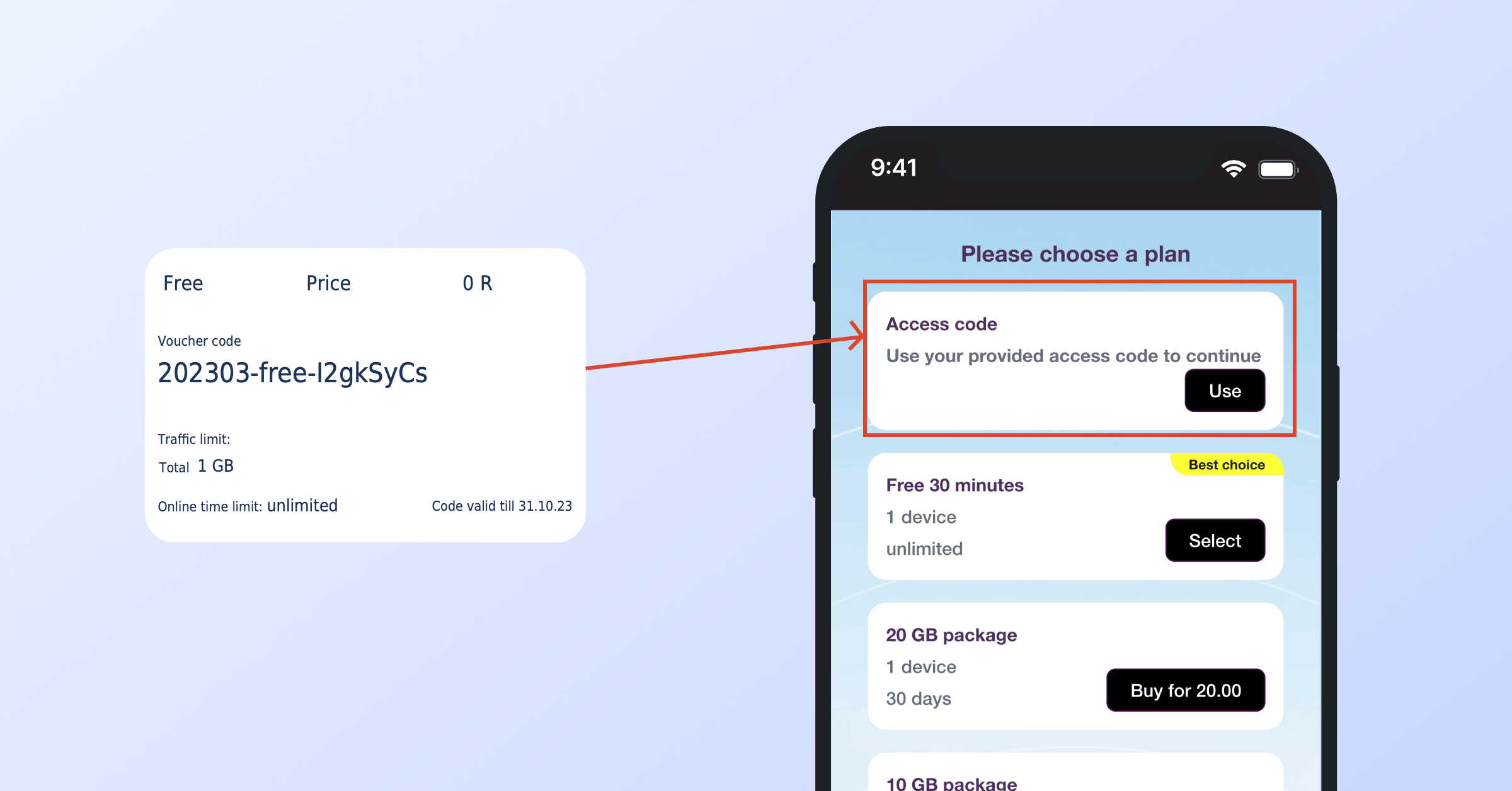
Three use cases make up the vast majority of deployments:
- Paid public hotspot. A coffee shop, bus terminal, park, or market charges per session. Guests buy a voucher at the counter, via mobile money, or from a retail PIN network. Access expires when the time or data runs out.
- Controlled hospitality access. A hotel or guesthouse assigns one voucher per room per night. No shared Wi-Fi password circulating after checkout. Guests get exactly the access they paid for and nothing more.
- Monetized free-Wi-Fi extension. A free 30-minute tier keeps guests on-site. Premium-tier vouchers up-sell extra speed or data. Two revenue layers from one network and one platform.
The common thread? Your customer is transient, price-sensitive, or unbanked. A recurring subscription doesn’t fit their situation. A prepaid voucher does. See how Powerlynx manages the full paid Wi-Fi voucher lifecycle – from generation and branding to redemption and reporting: powerlynx.app/paid-wifi-vouchers/
Five revenue patterns that actually work
Not every voucher business looks the same. Here are the five models operators use successfully. Pick the one that fits your infrastructure and target market – or combine two of them once you’re live.
- Pure pay-per-use
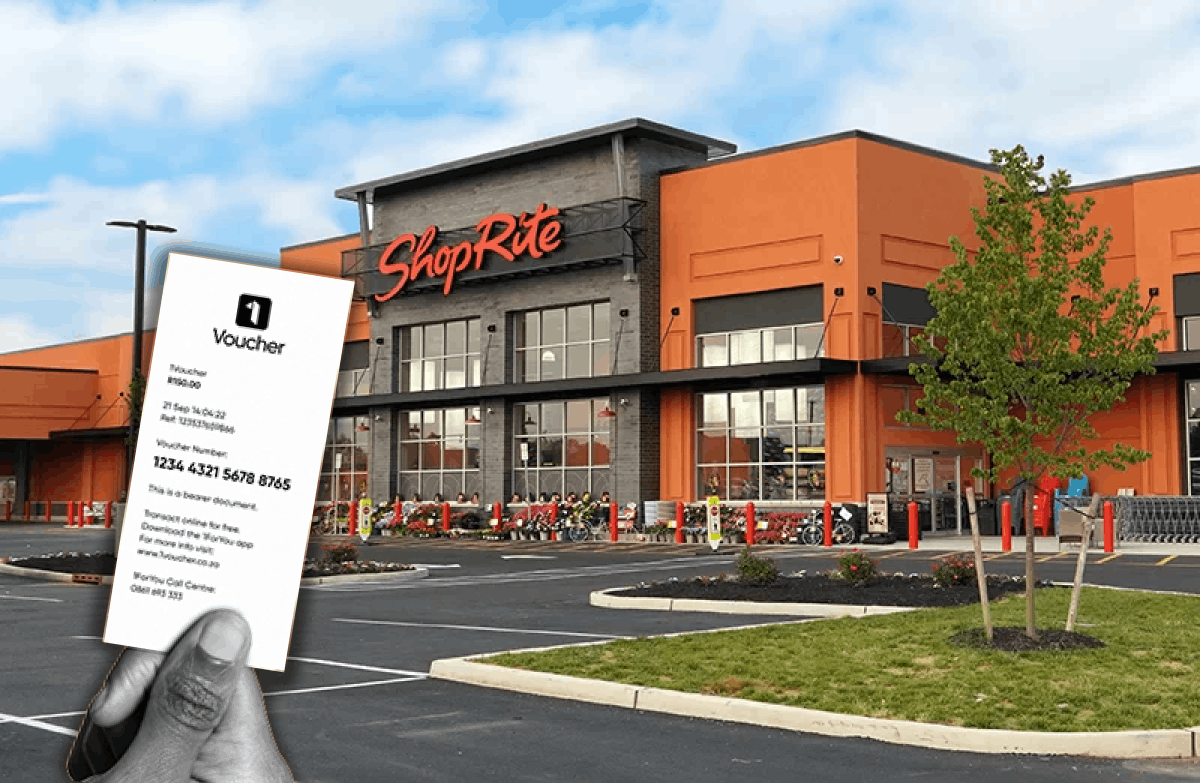
Guests purchase a voucher at a physical till, kiosk, or mobile app, then redeem it on your captive portal. In South Africa, the 1Voucher integration lets a guest walk into a Shoprite, PEP, Flash, or Spar, buy a Wi-Fi PIN with cash and connect immediately. No bank account required on either side.
- Voucher + ad
A free tier (30 minutes, ad-supported) keeps every visitor on the network. Premium vouchers (5 GB, 10 Mbps, 24 hours) up-sell users who need more. Powerlynx’s built-in advertising module handles the free tier; the voucher engine handles the premium revenue.
- Voucher + reseller margin
You wholesale voucher batches to a local spaza shop, petrol station, or small retailer. They sell at a 15-30% markup and keep the margin. You receive bulk payment upfront. This pattern scales fast in township and rural deployments – your resellers become your sales force.
- Voucher + accommodation bundle
A guesthouse, campsite, or marina bundles Wi-Fi into the nightly rate or offers it as a paid add-on at check-in. Powerlynx generates a branded PDF with a unique voucher code per booking. No passwords to reset, no shared credentials passed between rooms.
- Community / public Wi-Fi subsidies
A government body, NGO, or corporate sponsor funds network access; the operator distributes vouchers as the delivery mechanism. Project Isizwe’s Tshwane Free WiFi network (1,050+ public hotspots across Pretoria) uses this model at municipal scale.

| FROM THE FIELD
Inovi Tel (Limpopo, ZA) runs 57 Powerlynx hotspots combining direct voucher sales with targeted login campaigns sold to local advertisers. The dual revenue stream — access fees plus advertising impressions — means the network covers its running costs while generating a separate profit layer from the same infrastructure. |
Pricing math – how to set voucher prices that customers buy
Pricing too low kills margins. Pricing too high kills adoption. Here’s a five-step framework that operators use to find the right number for their specific market.
Step 1 — Estimate your concurrent-user load
Powerlynx charges $0.25 per concurrent online user per month. If your peak network supports 400 simultaneous users, your monthly platform cost is $100. That’s your baseline floor before any other expenses. See the full breakdown.
Step 2 — Build three tiers, not seven
Three options outperform both one (no choice) and seven (decision paralysis). A practical starting point for most markets:

Step 3 — Work the margin
A worked example: 1,000 vouchers/month at $2 average = $2,000 gross revenue. Gateway fees ≈ $100. Platform cost ≈ $100 (400 concurrent users × $0.25). Net operating margin: 90%+. That’s the economics of voucher Wi-Fi done right.
Step 4 — Revisit pricing quarterly
Pull Powerlynx’s voucher export reports to track your tier mix. If 85% of sales are daily passes, the weekly tier is priced too high or your audience genuinely is short-session. Either way, now you know, and you can adjust within minutes.
Choose the right payment gateway for your market
The gateway you choose determines who can actually pay you. In unbanked markets, the wrong gateway doesn’t produce low revenue – it produces zero revenue. Your customers can’t use what isn’t available to them.
Powerlynx ships 11 native payment integrations across four regions. No custom development, no third-party middleware required.
Africa & MEA
- PayFast – South Africa’s dominant online gateway, cards + instant EFT
- Netcash – South Africa, debit order + card processing
- DPO Pay – 16 African countries, cards + mobile money
- M-PESA (Safaricom) – Kenya’s dominant mobile money rail
- MTN MoMo – 8 African markets (GH, NG, CI, UG, RW, ZM, BN, CM)
- Paystack – Nigeria, Ghana, Kenya, South Africa, Côte d’Ivoire
Retail cash-to-PIN – critical for unbanked markets
- 1Voucher – Shoprite, PEP, Flash, Spar, Spaza; guests buy a Wi-Fi PIN with cash, like airtime
- OTT Voucher – complementary retail PIN network for broader coverage
Global
Southeast Asia
- Xendit – Indonesia, Philippines
The Wi-Fi Alliance estimates Wi-Fi generates $3.5 trillion in global economic value annually. The operators capturing the most of that in emerging markets are those who match their payment rails to their customers’ actual habits.
Simple decision rule: start with the dominant local mobile money or cash network. Add Stripe or PayPal as an international fallback. You don’t need all ten gateways on day one – you need the right two or three.
Build a captive portal that converts
The splash page is where your voucher business either makes or loses the sale. A confusing portal costs you customers before they ever see a price. A clean one converts strangers into paying users in under 30 seconds.
A high-converting portal has four elements in place:
- Branded header. Your logo, network name, and a one-line value statement “Fast Wi-Fi from R10.” Guests need to know they’re in the right place and what they’re about to buy.
- Single primary call to action above the fold. One button: “Buy a voucher.” Don’t split attention between social login options, a survey, and a PIN redemption field all on the same screen.
- Relevant payment options only. Show the methods that work in your market.
- Friction-free voucher entry. If a guest already has a code, they need a simple PIN field – not a full registration form before they can type five digits.
Powerlynx’s no-code splash-page editor handles all four. Drag and drop, no developer required. Configure per-location branding, per-location payment options, and multi-language support from a single dashboard. Preview on mobile before going live.
One rule operators consistently get wrong: collect only the data you’ll actually use. Every extra field reduces conversion. If you’re not going to run SMS campaigns, don’t ask for a phone number.
Read also: Splash-page editor tips.
Operational setup from zero to your first sold voucher
Here’s the exact launch sequence. Most operators complete it in under a working day – from sign-up to first paid session.
- Start your free trial. Sign up at account – 21 days, every feature enabled, no credit card required, no limitations in features.
- Connect your hardware. Powerlynx works with MikroTik, Cambium (cnMaestro), Nokia, Ruckus, Teltonika, and Cudy. For any other vendor supporting WireGuard, OpenVPN, or public-IP RADIUS, generic config takes under 10 minutes.
- Configure RADIUS. Point your NAS to Powerlynx’s cloud RADIUS endpoint via WireGuard tunnel or direct public IP. The MikroTik one-script setup takes under 5 minutes.
- Create your voucher tiers. In the portal, define time limit, data quota, speed, and device cap per tier. Name them something customers understand: “1 Hour”, “Day Pass”, “Week Pass.”
- Connect a payment gateway + SMS provider. Add your regional gateway. Then add Twilio or SMSPortal for SMS OTP two-factor authentication – 15 minutes of setup that prevents a disproportionate amount of fraud.
- Design your splash page. Use the no-code editor to brand it, set the payment flow, and choose which fields to collect. Check the mobile preview at 375px width before saving.
- Export and print voucher PDFs. Generate a branded batch with PIN codes, your logo, and redemption instructions – Powerlynx builds these with one click.
- Go live. Watch the dashboard for vouchers sold by tier, concurrent sessions, and conversion rate. Adjust the same day if something isn’t working.
Real ISPs winning with paid vouchers
There are operators running Powerlynx-powered voucher businesses today, across three continents and five very different market conditions.
Project Isizwe – South Africa
The largest public Wi-Fi deployment in Africa. 69 schools, 20,000+ learners, 500 educators. The Tshwane Free WiFi network spans 1,050+ public hotspots across Pretoria’s townships and CBD. Vouchers fund the community connectivity layer on top of government-subsidised free access – proving the model works at full municipal scale.

Inovi Tel – Limpopo, ZA
57 Powerlynx hotspots in a rural South African province, combining direct voucher sales with targeted login campaigns sold to local businesses. The dual revenue stream (access fees plus advertising impressions) means the network covers its running costs while generating a separate profit layer from exactly the same infrastructure.

CJIES – South Sudan
Multi-location community internet in Juba, in one of the continent’s most challenging connectivity markets. Vouchers work here precisely because card payment infrastructure doesn’t exist. Mobile money and cash-to-PIN distribution make access possible for a largely unbanked population.

Read the full stories in the Powerlynx use cases library.
KPI dashboard – what to measure every week
A voucher business that doesn’t track its numbers is flying blind. Six metrics tell you everything you need about network health and revenue performance.
- Revenue per active hotspot. Normalises for network size. If one location generates 3× the revenue of an identical deployment, find out why and replicate it.
- Vouchers sold by tier. Mix shift reveals pricing problems. If daily passes outsell weekly 20:1, your weekly tier is priced too high or your audience is genuinely short-session.
- ARPU and concurrent peak users. ARPU measures whether your pricing ladder is pulling users upmarket. Concurrent peak users tells you when you’re approaching your platform tier ceiling.
- Voucher-to-active-session ratio. Selling 500 vouchers/day but seeing 100 active sessions? Vouchers are being shared or failing to activate. Investigate early.
- Refund / dispute rate by gateway. A high rate on one gateway often signals a checkout UX problem. Walk through the payment flow as a customer on a phone.
Powerlynx surfaces all 5 in built-in reports exportable with MAC/IP/NAS data. Access everything via the public read-only API.
Ready to launch your Wi-Fi voucher business?
Voucher monetization is the most defensible Wi-Fi revenue model in 2026. It scales in markets where card infrastructure is thin. And it generates gross margins that most businesses would envy.
The operators profiled above didn’t start with perfect networks or large budgets. They started with the right platform, the right pricing structure, and the right payment gateways for their markets. The infrastructure followed the revenue.
| 👉 START YOUR 21-DAY FREE TRIAL
Sign up at account.powerlynx.app/register — every feature enabled, no limitations in features, no credit card required. |
Frequently asked questions
How do Wi-Fi vouchers actually work?
A Wi-Fi voucher is a unique single-use code granting Internet access for a defined time window, data quota, speed limit, and device count. A guest connects to your network, enters the code on the captive portal, and gets online instantly. With Powerlynx, vouchers are generated in the dashboard, printable as branded PDFs, deliverable by SMS, or sold through 10 supported payment gateways — no manual handling required.
Is a Wi-Fi voucher business profitable?
Yes, at modest scale. With Powerlynx’s per-user pricing of $0.25 per concurrent online user, an operator selling 1,000 vouchers/month at $2 each typically nets 85–90% gross margin after platform and gateway fees. Inovi Tel (Limpopo, ZA) operates 57 voucher-funded hotspots. Project Isizwe powers 1,050+ public hotspots. SpeedTouch (Egypt) won a national entrepreneurship award in December 2024 on this exact model.
What’s the difference between a paid voucher and a Wi-Fi subscription?
A voucher is a one-time prepaid code — pay once, use the allowance, expire. A subscription auto-bills the user on a recurring schedule. Vouchers work best where users are transient (hospitality, retail, public Wi-Fi) or unbanked. Subscriptions work best where users are loyal and bankable (residential, MDU). Powerlynx supports both models on the same platform.
Which payment gateway should I use to sell Wi-Fi vouchers?
Start with the dominant local payment method for your market, then add an international fallback. South Africa: PayFast, Netcash, 1Voucher, OTT Voucher. Kenya: M-PESA. Nigeria, Ghana, Côte d’Ivoire: Paystack. Across Africa: DPO Pay (16 countries) and MTN MoMo (8 countries). Southeast Asia: Xendit. Global: Stripe (46+ countries) and PayPal (200+ countries).
Do I need special hardware to run a Wi-Fi voucher business?
No special hardware is required — just a RADIUS-capable router or access point. Powerlynx is hardware-agnostic with first-class integrations for MikroTik, Cambium (cnMaestro), Ruckus, Teltonika, Cudy, and Nokia. Any device supporting WireGuard, OpenVPN, or public-IP RADIUS will connect in minutes using Powerlynx’s standard configuration guide.
How quickly can I launch a voucher hotspot?
With Powerlynx, you can move from sign-up to a live, paid voucher tier in a single working day. The 21-day free trial includes every feature with no limitations. Connect hardware (under 5 minutes with the MikroTik one-script setup), create voucher tiers, connect a payment gateway, design your splash page, go live.
How should I price my Wi-Fi vouchers?
Use a three-tier structure: a quick session (60 min / 1 GB / 5 Mbps), a daily pass (24 hours / 5 GB / 10 Mbps), and a weekly pass (7 days / unlimited / 20 Mbps). Aim for 80%+ gross margin after platform and gateway fees. Pull Powerlynx’s voucher export reports every quarter to track your tier mix and adjust pricing based on actual purchasing behaviour.
Can I sell physical printed vouchers at a retail counter?
Yes. Powerlynx exports voucher batches as branded PDFs — complete with QR codes, PIN codes, your logo, and redemption instructions — ready to print and hand over a counter. The 1Voucher and OTT Voucher integrations extend this further: guests can walk into a Shoprite, PEP, Flash, or Spar and buy a Wi-Fi PIN with cash, like buying airtime.
How do I prevent voucher abuse and fraud?
Three layers: limit concurrent devices per voucher code in the rule set; require SMS-based OTP two-factor authentication on the splash page via Twilio or SMSPortal; and monitor unusual session patterns in the dashboard. Powerlynx’s Custom Fields and Target Groups let you flag returning fraudulent identities across sessions.
What KPIs should I track each week to grow voucher revenue?
Revenue per active hotspot, vouchers sold by tier, ARPU, splash-page-to-purchase conversion rate, voucher-to-active-session ratio, and refund/chargeback rate by gateway. Powerlynx surfaces all six in built-in reports with MAC/IP/NAS-level detail, and exposes them via the public read-only API (released October 2025) for teams integrating with a BI tool.